Click Here
Cart

Order the instant New York Times bestseller: The 5 Types of Wealth

Order My NYT Bestselling Book

The Personal Quarterly Review

Sahil Bloom

Welcome to the 242 new members of the curiosity tribe who have joined us since Wednesday. Join the 57,887 others who are receiving high-signal, curiosity-inducing content every single week.

What’s a Rich Text element?

The rich text element allows you to create and format headings, paragraphs, blockquotes, images, and video all in one place instead of having to add and format them individually. Just double-click and easily create content.

Static and dynamic content editing

A rich text element can be used with static or dynamic content. For static content,

just drop it into any page and begin editing. For dynamic content, add a rich text field to any collection and then connect a rich text element to that field in the settings panel. Voila!

  • mldsa
  • ,l;cd
  • mkclds

How to customize formatting for each rich text

Headings, paragraphs, blockquotes, figures, images, and figure captions can all be styled after a class is added to the rich text element using the "When inside of"

nested selector

system.

It's hard to believe that we’re already 25% of the way through 2026.

This is an important time of year. The excitement and motivation of your new year planning has likely worn off. You’ve faced the realities of life, probably encountered a few challenges and storms, and developed in your thinking.

The ultimate life hack is the ability to reset and adjust.

You have new data. New experiences. New insights. New evidence. New constraints.

So, it’s time to do just that:

  • Reflect on what happened
  • Reset current priorities and systems
  • Adjust as needed to realign and accelerate growth

I call this process my Personal Quarterly Review.

Here’s how to conduct yours (in 3 simple steps):

Note: You can download a printable PDF of the review template here.

Step 1: Reflect

Start with two questions to reflect on your prior quarter:

1. What created energy this quarter?

Your outcomes follow your energy. To action on this idea, I often use an exercise that I call the Energy Calendar.

The idea is that you look at your calendar and color code events according to whether they created energy (green), drained energy (red), or were neutral (yellow).

It might look something like this:
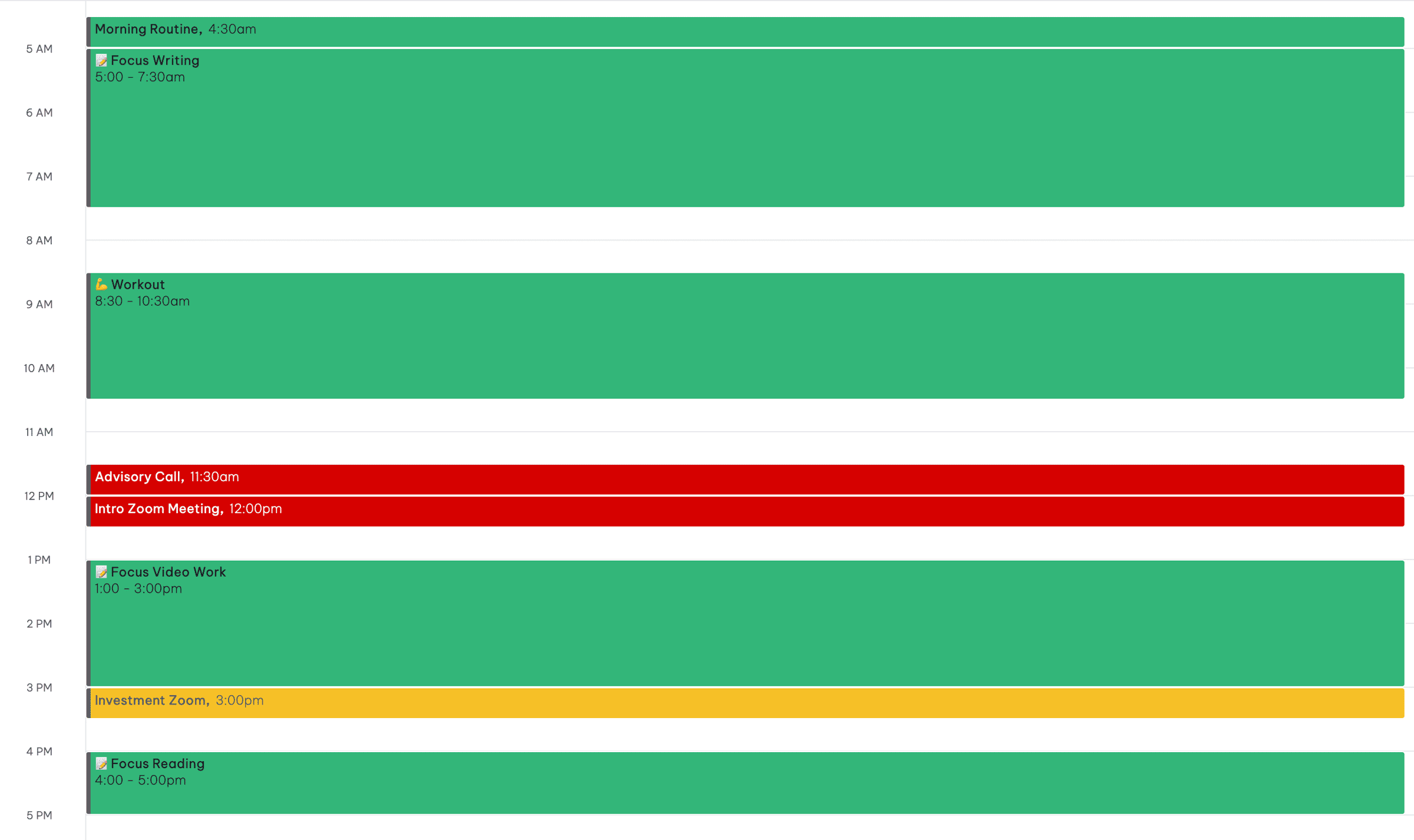
The goal is to reflect on the types of activities (and people) that create vs. drain energy in your life. That information allows you to make slow, steady adjustments to improve your ratio of green to red.

The first question of the Personal Quarterly Review builds upon this idea and asks you to reflect on your calendars from the quarter.

Open and review your calendar:

  • What activities, people, or projects consistently created energy in your life?
  • Did you spend ample time on these Energy Creators or did they get neglected?

Write down your responses.

2. What drained energy this quarter?

Continue your calendar reflection, but with an inverted focus:

  • What activities, people, or projects consistently drained energy from your life?
  • Did you allow the Energy Drainers to persist or did you manage them in real time?

Write down your responses.

Step 2: Reset

Continue with three questions to reset current priorities and systems:

1. What is my “most important thing” right now?

Think of this as the big picture, long-term goal for each area of your life.

I try to limit myself to one “most important thing” for each of my professional, personal, and health spheres.

It’s the compass—establishing your direction as you climb.

This may have changed or shifted since you conducted your new year planning work, so make sure to reassess what it should be.

2. What daily systems align with my most important thing?

If the most important thing is your compass, your daily systems are your feet. If your feet aren’t moving you in the direction your compass is pointing, you’re never going to get there.

Reset your systems from scratch here:

What are the 2-3 daily systems that would move you in the direction of your most important thing in each area of life?

Are you doing those things?

3. What is creating drag on my progress right now?

There are things in your life that hold you back—I call them Boat Anchors.

Boat anchors are people, attitudes, environments, or behaviors that hold you back from your potential. You're trying to push at full power, but they literally create a "drag" on your progress.

Review the quality of these elements in your life.

Are there things that are creating unnecessary drag?

Step 3: Adjust

Finish with three questions to make the necessary adjustments:

Note that each of these questions is action-oriented. This step should be focused on the specific actions you're going to take in the quarter ahead.

1. How will I prioritize energy creators and minimize energy drainers?

You identified your energy creators and energy drainers in Step 1.

How can you improve your ratio of creators-to-drainers in the quarter ahead?

Brainstorm ways to slowly manage, delegate, or delete the energy drainers. You might consider more aggressive time blocking of these activities, automating with technology systems, or creating new rules to eliminate certain types of activities from your life (e.g. no "get to know you" phone calls).

Use the newly free time to schedule more windows for energy creators.

2. How will I improve my systems alignment?

You identified your most important thing and the necessary daily systems in Step 2.

What changes need to be made to the structure of your days to dedicate appropriate time and energy to create the desired progress?

In my experience, time blocking your calendar with specific windows for the critical daily systems is the only way I execute them consistently.

There’s a saying I love:

Don’t tell me your priorities, show me your calendar.

It’s very true—and we would all benefit from holding our feet to the fire in this regard.

If a third party were to observe your actions for a week, what would they say your priorities are?

If you don't like the answer, make the adjustments now.

3. What will I eliminate to reduce drag?

You identified your Boat Anchors in Step 2.

Now make a plan to cut the line that connects you to them and remove their negative influence from your life.

The fastest way to make progress isn't to add something to serve you—it's to eliminate what no longer does.

To become the new, you have to unbecome the old.

Your Personal Quarterly Review

The Personal Quarterly Review is a powerful tool for personal and professional growth:

  • Reflect on what happened
  • Reset current priorities and systems
  • Adjust as needed to realign and accelerate growth

To get even more out of it, consider conducting it in a small group format.

Go through it individually, but then get together with a small group and walk through it. Pressure test, question assumptions, and provide feedback. This is a great way to ensure 2026 is a transformative year in your life.

Note: You can download a printable PDF of the review template here.

The Personal Quarterly Review

Sahil Bloom

Welcome to the 242 new members of the curiosity tribe who have joined us since Wednesday. Join the 57,887 others who are receiving high-signal, curiosity-inducing content every single week.

What’s a Rich Text element?

The rich text element allows you to create and format headings, paragraphs, blockquotes, images, and video all in one place instead of having to add and format them individually. Just double-click and easily create content.

Static and dynamic content editing

A rich text element can be used with static or dynamic content. For static content,

just drop it into any page and begin editing. For dynamic content, add a rich text field to any collection and then connect a rich text element to that field in the settings panel. Voila!

  • mldsa
  • ,l;cd
  • mkclds

How to customize formatting for each rich text

Headings, paragraphs, blockquotes, figures, images, and figure captions can all be styled after a class is added to the rich text element using the "When inside of"

nested selector

system.

It's hard to believe that we’re already 25% of the way through 2026.

This is an important time of year. The excitement and motivation of your new year planning has likely worn off. You’ve faced the realities of life, probably encountered a few challenges and storms, and developed in your thinking.

The ultimate life hack is the ability to reset and adjust.

You have new data. New experiences. New insights. New evidence. New constraints.

So, it’s time to do just that:

  • Reflect on what happened
  • Reset current priorities and systems
  • Adjust as needed to realign and accelerate growth

I call this process my Personal Quarterly Review.

Here’s how to conduct yours (in 3 simple steps):

Note: You can download a printable PDF of the review template here.

Step 1: Reflect

Start with two questions to reflect on your prior quarter:

1. What created energy this quarter?

Your outcomes follow your energy. To action on this idea, I often use an exercise that I call the Energy Calendar.

The idea is that you look at your calendar and color code events according to whether they created energy (green), drained energy (red), or were neutral (yellow).

It might look something like this:

The goal is to reflect on the types of activities (and people) that create vs. drain energy in your life. That information allows you to make slow, steady adjustments to improve your ratio of green to red.

The first question of the Personal Quarterly Review builds upon this idea and asks you to reflect on your calendars from the quarter.

Open and review your calendar:

  • What activities, people, or projects consistently created energy in your life?
  • Did you spend ample time on these Energy Creators or did they get neglected?

Write down your responses.

2. What drained energy this quarter?

Continue your calendar reflection, but with an inverted focus:

  • What activities, people, or projects consistently drained energy from your life?
  • Did you allow the Energy Drainers to persist or did you manage them in real time?

Write down your responses.

Step 2: Reset

Continue with three questions to reset current priorities and systems:

1. What is my “most important thing” right now?

Think of this as the big picture, long-term goal for each area of your life.

I try to limit myself to one “most important thing” for each of my professional, personal, and health spheres.

It’s the compass—establishing your direction as you climb.

This may have changed or shifted since you conducted your new year planning work, so make sure to reassess what it should be.

2. What daily systems align with my most important thing?

If the most important thing is your compass, your daily systems are your feet. If your feet aren’t moving you in the direction your compass is pointing, you’re never going to get there.

Reset your systems from scratch here:

What are the 2-3 daily systems that would move you in the direction of your most important thing in each area of life?

Are you doing those things?

3. What is creating drag on my progress right now?

There are things in your life that hold you back—I call them Boat Anchors.

Boat anchors are people, attitudes, environments, or behaviors that hold you back from your potential. You're trying to push at full power, but they literally create a "drag" on your progress.

Review the quality of these elements in your life.

Are there things that are creating unnecessary drag?

Step 3: Adjust

Finish with three questions to make the necessary adjustments:

Note that each of these questions is action-oriented. This step should be focused on the specific actions you're going to take in the quarter ahead.

1. How will I prioritize energy creators and minimize energy drainers?

You identified your energy creators and energy drainers in Step 1.

How can you improve your ratio of creators-to-drainers in the quarter ahead?

Brainstorm ways to slowly manage, delegate, or delete the energy drainers. You might consider more aggressive time blocking of these activities, automating with technology systems, or creating new rules to eliminate certain types of activities from your life (e.g. no "get to know you" phone calls).

Use the newly free time to schedule more windows for energy creators.

2. How will I improve my systems alignment?

You identified your most important thing and the necessary daily systems in Step 2.

What changes need to be made to the structure of your days to dedicate appropriate time and energy to create the desired progress?

In my experience, time blocking your calendar with specific windows for the critical daily systems is the only way I execute them consistently.

There’s a saying I love:

Don’t tell me your priorities, show me your calendar.

It’s very true—and we would all benefit from holding our feet to the fire in this regard.

If a third party were to observe your actions for a week, what would they say your priorities are?

If you don't like the answer, make the adjustments now.

3. What will I eliminate to reduce drag?

You identified your Boat Anchors in Step 2.

Now make a plan to cut the line that connects you to them and remove their negative influence from your life.

The fastest way to make progress isn't to add something to serve you—it's to eliminate what no longer does.

To become the new, you have to unbecome the old.

Your Personal Quarterly Review

The Personal Quarterly Review is a powerful tool for personal and professional growth:

  • Reflect on what happened
  • Reset current priorities and systems
  • Adjust as needed to realign and accelerate growth

To get even more out of it, consider conducting it in a small group format.

Go through it individually, but then get together with a small group and walk through it. Pressure test, question assumptions, and provide feedback. This is a great way to ensure 2026 is a transformative year in your life.

Note: You can download a printable PDF of the review template here.