Click Here
Cart

Order the instant New York Times bestseller: The 5 Types of Wealth

Order My NYT Bestselling Book

The Streetlight Effect

Sahil Bloom

Welcome to the 242 new members of the curiosity tribe who have joined us since Wednesday. Join the 57,887 others who are receiving high-signal, curiosity-inducing content every single week.

What’s a Rich Text element?

The rich text element allows you to create and format headings, paragraphs, blockquotes, images, and video all in one place instead of having to add and format them individually. Just double-click and easily create content.

Static and dynamic content editing

A rich text element can be used with static or dynamic content. For static content,

just drop it into any page and begin editing. For dynamic content, add a rich text field to any collection and then connect a rich text element to that field in the settings panel. Voila!

  • mldsa
  • ,l;cd
  • mkclds

How to customize formatting for each rich text

Headings, paragraphs, blockquotes, figures, images, and figure captions can all be styled after a class is added to the rich text element using the "When inside of"

nested selector

system.

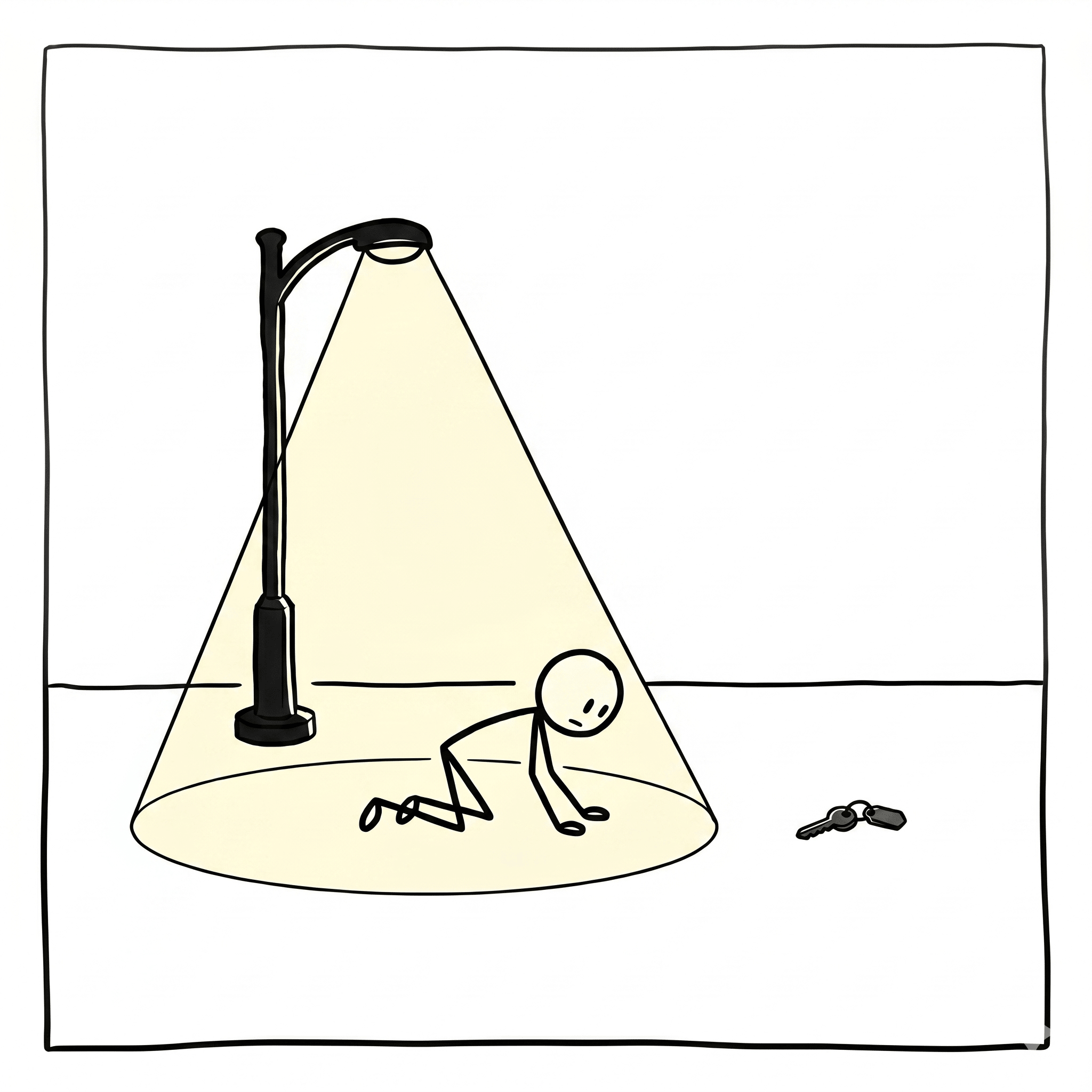
A man is crawling on the ground under a streetlight when a passerby approaches.

"What are you doing?" he asks.

"I'm looking for my keys," replies the man.

"Did you lose them right here?"

"No, but this is where the light is."

This old story—one of my personal favorites—forms the basis for something called The Streetlight Effect:

It's the tendency to look where there's light, rather than where there's truth.

To measure the things that are easy, rather than the things that are meaningful.

To cling to routines we know, rather than adapt new ones that work.

To ask the questions we can answer, rather than the ones we're avoiding.
I've found it too easy to fall into this trap in my own life.

In my early career years, I obsessed over the number of hours I worked rather than the work that actually mattered.

I'd glamorize long hours and forget that many of them were spent scrolling on the internet, managing a productivity system, or processing emails.

I'd cling to my hours worked as a sign of my importance and value, but ignore the harder questions about the work I was really doing.

It popped up in my early writing and content.

I focused on the easy metrics like subscribers, views, and likes, but ignored the (much) more important, yet difficult to measure things, like trust, audience connection, and authenticity.

It even appeared in my relationships.

After my son was born, I kept measuring myself on whether I was showing up for the rituals we'd built when it was just the two of us. The real question wasn't whether I was doing the old things; it was whether my wife actually felt seen, supported, and partnered with in this new season of life.

That was harder to look at. So for a while, I didn't.

Fortunately, I realized the mistakes I was making quickly enough to fix them.

Three questions helped dramatically alter my approach:

  1. What are you doing simply because it's the easy thing to do? So often in life we fall into patterns of what I think of as “bad momentum”—we just continue doing things because it’s the way we’ve always done them. Because it’s easy to keep doing it the same way and avoid digging deeper. This question chips away at that tendency.
  2. What actually matters here that you can't easily see? We are very good at convincing ourselves that the thing that we can see is the thing that really matters. But the truth is often more complicated than that. Sometimes it just takes peeling back the layers a little bit for you to realize that you were ignoring the thing you should have been focusing on all along.
  3. If the light moved, would you still be looking in the same place? This brings the metaphor all the way through. If the light shifted, would this current thing still be the thing you were focused on? If not, you’re just the man stumbling around under the streetlight.

The keys may not be where the light shines.

Sometimes you have to be willing to walk through the dark to find them.

Because here's the truth you rarely want to admit:

The answers you seek are found in the questions you avoid.

The Streetlight Effect

Sahil Bloom

Welcome to the 242 new members of the curiosity tribe who have joined us since Wednesday. Join the 57,887 others who are receiving high-signal, curiosity-inducing content every single week.

What’s a Rich Text element?

The rich text element allows you to create and format headings, paragraphs, blockquotes, images, and video all in one place instead of having to add and format them individually. Just double-click and easily create content.

Static and dynamic content editing

A rich text element can be used with static or dynamic content. For static content,

just drop it into any page and begin editing. For dynamic content, add a rich text field to any collection and then connect a rich text element to that field in the settings panel. Voila!

  • mldsa
  • ,l;cd
  • mkclds

How to customize formatting for each rich text

Headings, paragraphs, blockquotes, figures, images, and figure captions can all be styled after a class is added to the rich text element using the "When inside of"

nested selector

system.

A man is crawling on the ground under a streetlight when a passerby approaches.

"What are you doing?" he asks.

"I'm looking for my keys," replies the man.

"Did you lose them right here?"

"No, but this is where the light is."

This old story—one of my personal favorites—forms the basis for something called The Streetlight Effect:

It's the tendency to look where there's light, rather than where there's truth.

To measure the things that are easy, rather than the things that are meaningful.

To cling to routines we know, rather than adapt new ones that work.

To ask the questions we can answer, rather than the ones we're avoiding.

I've found it too easy to fall into this trap in my own life.

In my early career years, I obsessed over the number of hours I worked rather than the work that actually mattered.

I'd glamorize long hours and forget that many of them were spent scrolling on the internet, managing a productivity system, or processing emails.

I'd cling to my hours worked as a sign of my importance and value, but ignore the harder questions about the work I was really doing.

It popped up in my early writing and content.

I focused on the easy metrics like subscribers, views, and likes, but ignored the (much) more important, yet difficult to measure things, like trust, audience connection, and authenticity.

It even appeared in my relationships.

After my son was born, I kept measuring myself on whether I was showing up for the rituals we'd built when it was just the two of us. The real question wasn't whether I was doing the old things; it was whether my wife actually felt seen, supported, and partnered with in this new season of life.

That was harder to look at. So for a while, I didn't.

Fortunately, I realized the mistakes I was making quickly enough to fix them.

Three questions helped dramatically alter my approach:

  1. What are you doing simply because it's the easy thing to do? So often in life we fall into patterns of what I think of as “bad momentum”—we just continue doing things because it’s the way we’ve always done them. Because it’s easy to keep doing it the same way and avoid digging deeper. This question chips away at that tendency.
  2. What actually matters here that you can't easily see? We are very good at convincing ourselves that the thing that we can see is the thing that really matters. But the truth is often more complicated than that. Sometimes it just takes peeling back the layers a little bit for you to realize that you were ignoring the thing you should have been focusing on all along.
  3. If the light moved, would you still be looking in the same place? This brings the metaphor all the way through. If the light shifted, would this current thing still be the thing you were focused on? If not, you’re just the man stumbling around under the streetlight.

The keys may not be where the light shines.

Sometimes you have to be willing to walk through the dark to find them.

Because here's the truth you rarely want to admit:

The answers you seek are found in the questions you avoid.