Click Here
Cart

Order the instant New York Times bestseller: The 5 Types of Wealth

Order My NYT Bestselling Book

AI Negativity Bias: Why You Only Hear About AI Doom

Sahil Bloom

Welcome to the 242 new members of the curiosity tribe who have joined us since Wednesday. Join the 57,887 others who are receiving high-signal, curiosity-inducing content every single week.

What’s a Rich Text element?

The rich text element allows you to create and format headings, paragraphs, blockquotes, images, and video all in one place instead of having to add and format them individually. Just double-click and easily create content.

Static and dynamic content editing

A rich text element can be used with static or dynamic content. For static content,

just drop it into any page and begin editing. For dynamic content, add a rich text field to any collection and then connect a rich text element to that field in the settings panel. Voila!

  • mldsa
  • ,l;cd
  • mkclds

How to customize formatting for each rich text

Headings, paragraphs, blockquotes, figures, images, and figure captions can all be styled after a class is added to the rich text element using the "When inside of"

nested selector

system.

I feel like I need to say something...

Over the last few weeks, it seems like I can't go ten minutes without having a new "AI Doom" story hit my feed.

First, it was an X article with a catchy title, Something Big Is Happening, that basically said every knowledge economy job is in imminent danger of replacement by AI. It reached 85 million views on X and infiltrated every family and friend group chat on my phone.

Last week, a Substack post entitled The 2028 Global Intelligence Crisis painted a vivid imaginary scenario where the global economy is in peril from the rise of AI, just two years in the future. The stock market actually dropped as the piece made the rounds.

Then, it was Block CEO Jack Dorsey announcing a 40% layoff at his company, from 10,000 to 6,000, citing the new way people were working with AI. His move sent the stock ripping 20% higher. Every commentator was quick to grab hold of his statement and actions as the start of an AI Doom Ripple through the economy. Weighing in on his announcement with a hard, pessimistic take became the trending behavior of the day.

If you wanted to find a positive, optimistic counter to these narratives (which I did!), you had to put in sincere effort. Finding a negative, pessimistic take was as easy as refreshing your feed.

The extraordinary virality of the AI Doom narrative is notable. It spreads rapidly to every corner of the internet. It's shared, talked about, and clicked on, millions upon millions of times.

And as it turns out, cognitive science shows us why...

The Negativity Doom Loop

A ​2023 study​ of 105,000 headlines and 370 million impressions found that negative words drive consumption.
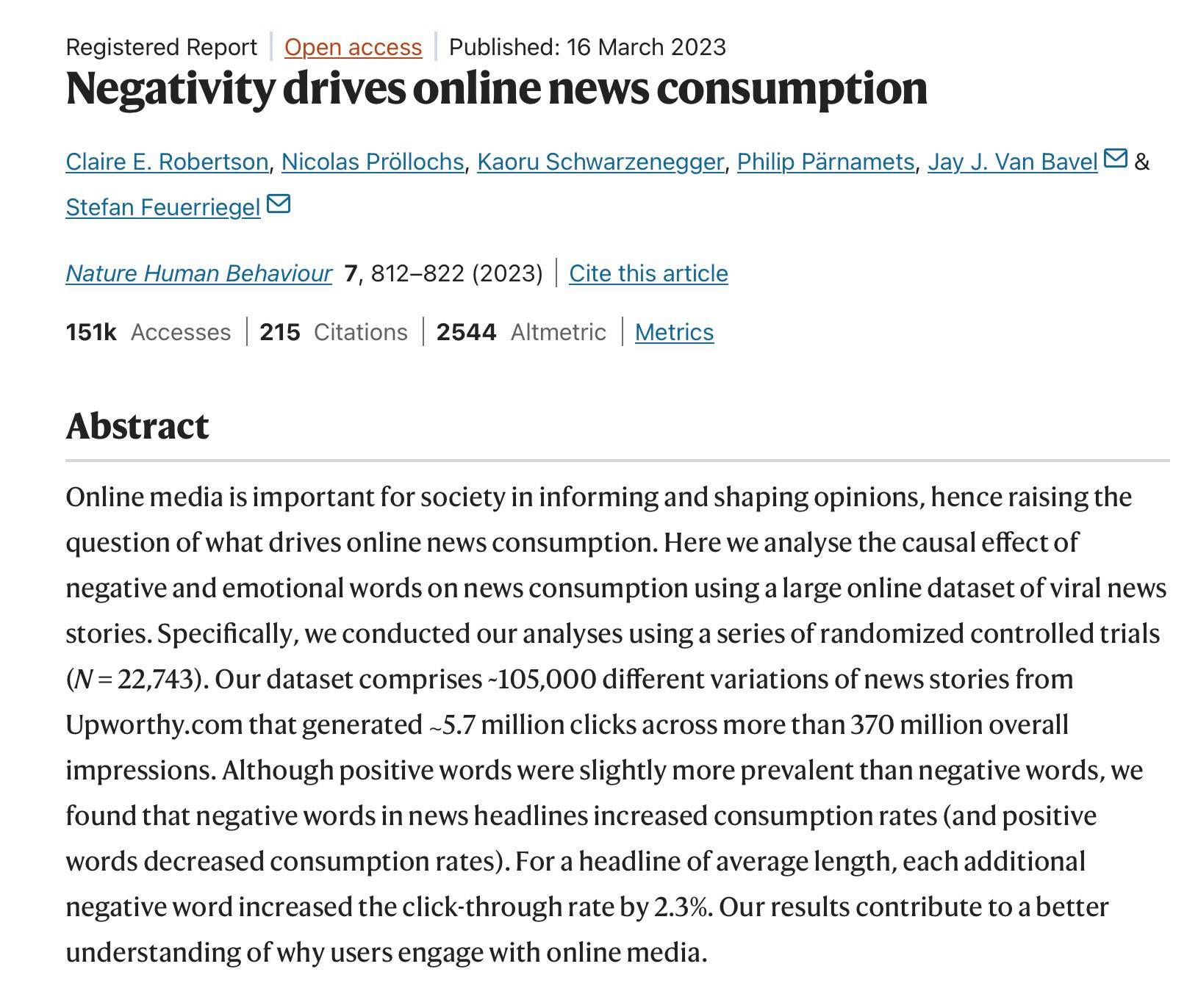
Quoting the research:

"For a headline of average length, each additional negative word increased the click-through rate by 2.3%"

I want to stop here to reinforce this finding. This is critical to understand because it creates a fundamental self-fulfilling prophecy when it comes to the information you see and consume.

I might call this the Negativity Doom Loop:
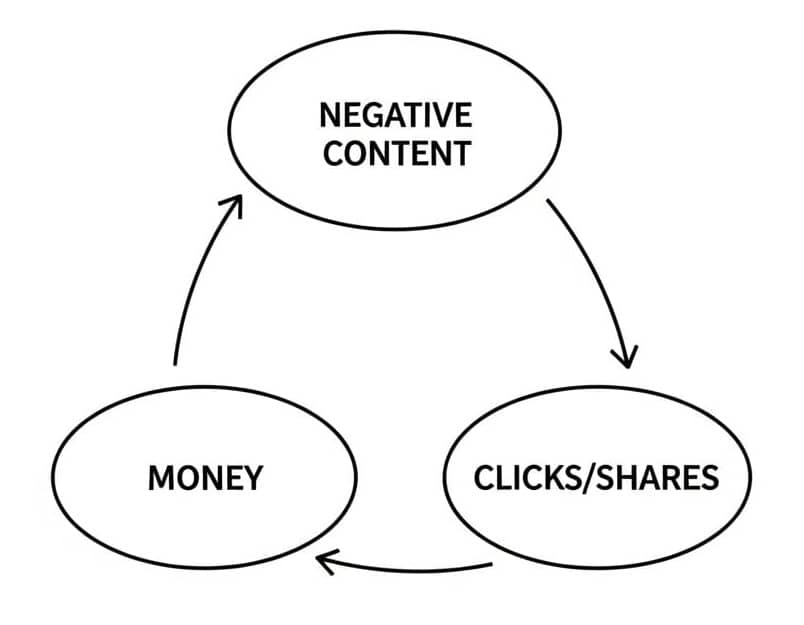
Negative content is what gets more clicks and shares, which drive the economic machine of online media.

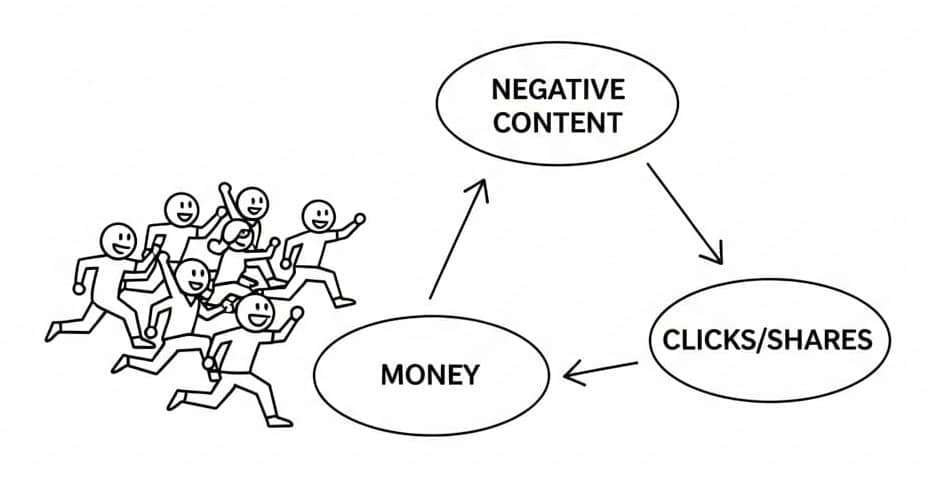
What makes this loop so damning in the social media age is that the "market" of content creators responds to what they see working. They want the money (or at least the dopamine rush) of the clicks and shares that others are getting!

So, you get a mad dash into the creation of negative content:
The point I'm trying to reinforce here is simple, but important:

The incentives skew the content towards the negative.

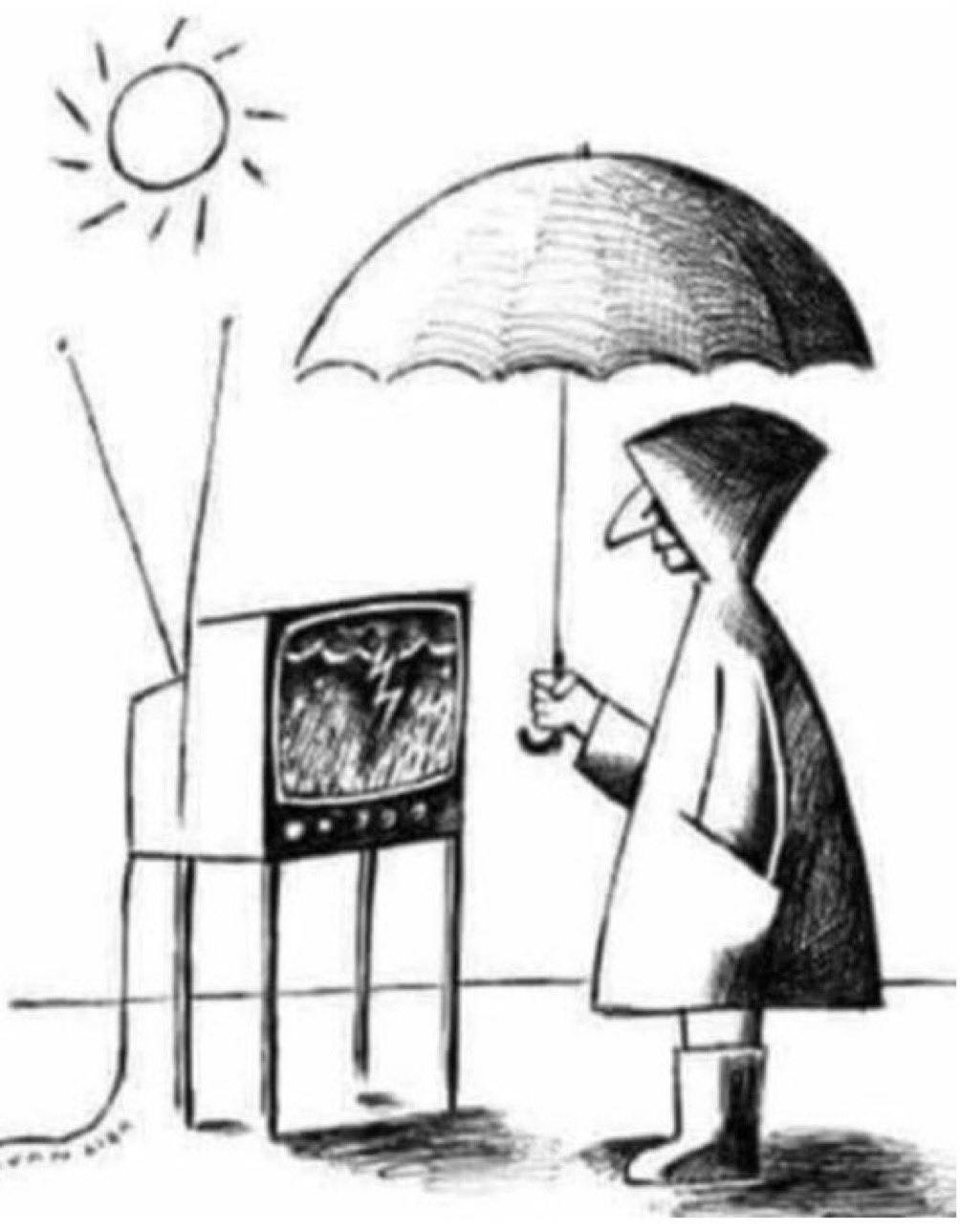
If you think about the content you consume as your information diet, it's easy to see how a diet based on this skewed content would not be a healthy one.

Your view of reality would be warped.

One of my favorite memes captures this better than I ever could:
So, yes, I feel like I need to say something about AI...

And this may not be popular...

I'm optimistic about the future.

Towards A Balanced View

Author F. Scott Fitzgerald has a quote I often come back to:

"The test of a first-rate intelligence is the ability to hold two opposed ideas in the mind at the same time, and still retain the ability to function."

That is what I believe is required in this moment with respect to AI.

Two things can be true at once:

  1. AI can be a disruptive, ground-shaking force, AND
  2. Humans can thrive through it.

Throughout history, there were profound technological innovations that created short-term instability and long-term progress.

And if there's one truth, it's that it's often hard to see the progress when you're caught in the wave of instability.

But a few things make me much more optimistic than the prevailing narrative:

1. The existence of a technology is very different than the widespread adoption of that technology.

Just because something exists, does not mean it has penetrated every nook and cranny of society. The real economy is filled with complexities and bottlenecks, and AI has its own (compute/electricity).

The prior point is not to say that it's never coming, but that we have more time to build and adapt for a future with it than the doomsday scenarios would have you believe.

2. Productivity gains reduce costs and spark new demand.

A ​recent piece from Citadel​ referenced a 1930 prediction by John Maynard Keynes that by the early 21st century, productivity growth would lead to a 15-hour workweek.

They wrote:

"He was directionally correct about productivity growth, but profoundly wrong about labor market implications. Rather than working dramatically less, societies consumed dramatically more. Why? Because rising productivity lowered costs and expanded the consumption frontier...History suggests productivity gains do not automatically translate into labor withdrawal or demand collapse as they alter the composition of demand, expand real incomes and generate new industries."

In other words, the new productivity unlocked by AI could be an incredible positive, not the crippling negative that the doom narrative suggests.

3. The curious mind will thrive.

Referencing a famous Steve Jobs quote that called computers a "bicycle for the mind," Naval Ravikant called AI a "motorcycle for the mind." There's a unique opportunity for those who learn to ride that motorcycle. The curious, engaged mind will learn how to visit wonderful new places with it.

You can spin up a business-of-one, pursue an idea, create value, and do things faster than ever before.

The walls of credentialism are collapsing. The opportunity playing field is evening. Value created will be the only credential that will count.

I think we may be entering the best time in history for the curious mind. And given this newsletter is called The Curiosity Chronicle, I'm bullish on the future for all of you, my curious readers!

The Value of Optimism

Pessimists sound smart. Optimists get rich (in ways including, but not limited to, money).

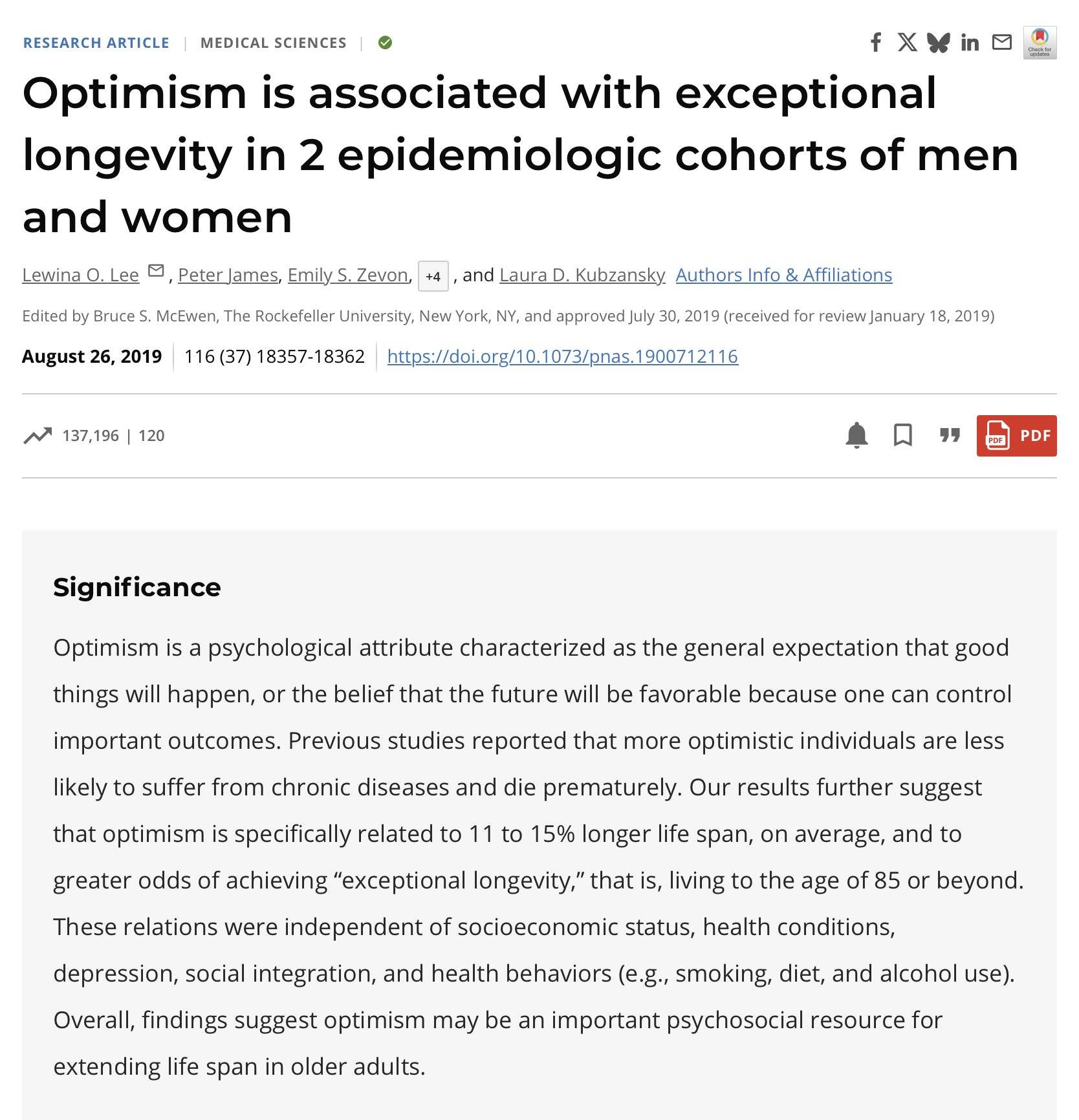
In a ​recent study​, researchers found optimism is actually linked to a longer lifespan.
So, let's all strive to be a bit more optimistic. Not blindly, but thoughtfully.

By becoming aware of the overwhelming bias towards negativity. By making a concerted effort to balance your information diet.

By holding two opposing ideas in your mind at the same time, and still retaining the ability to function.

I don't think there is any denying that the coming few decades will have periods of uncertainty. Jobs that felt safe may no longer be. Career paths we planned for will get shaken up.

To paraphrase Mark Twain, a lot of things we know for sure probably just ain't so.

But despite all of that, you'll make it through.

Recall my ​recent piece​ on the End of History Illusion, which is the psychological phenomenon that we underestimate our ability to change in the future:

I wrote:

The mistake you make is in assuming that the uncertainty ahead will ask today's version of you to shoulder tomorrow's challenges.

It doesn't.

The external uncertainty is a catalyst for internal change. You are not a fixed entity. You are not done becoming.

New experiences reshape your perspectives. New challenges forge new skills. New chapters create new values.

You aren't the same person today that you were a year ago—and you won't be the same person a year from now that you are today.

The future is brighter than you've been led to believe.

Be curious. Have a bias for action. Spend time with positive people. And just do things.

Maybe this time is different. But you will be, too.

AI Negativity Bias: Why You Only Hear About AI Doom

Sahil Bloom

Welcome to the 242 new members of the curiosity tribe who have joined us since Wednesday. Join the 57,887 others who are receiving high-signal, curiosity-inducing content every single week.

What’s a Rich Text element?

The rich text element allows you to create and format headings, paragraphs, blockquotes, images, and video all in one place instead of having to add and format them individually. Just double-click and easily create content.

Static and dynamic content editing

A rich text element can be used with static or dynamic content. For static content,

just drop it into any page and begin editing. For dynamic content, add a rich text field to any collection and then connect a rich text element to that field in the settings panel. Voila!

  • mldsa
  • ,l;cd
  • mkclds

How to customize formatting for each rich text

Headings, paragraphs, blockquotes, figures, images, and figure captions can all be styled after a class is added to the rich text element using the "When inside of"

nested selector

system.

I feel like I need to say something...

Over the last few weeks, it seems like I can't go ten minutes without having a new "AI Doom" story hit my feed.

First, it was an X article with a catchy title, Something Big Is Happening, that basically said every knowledge economy job is in imminent danger of replacement by AI. It reached 85 million views on X and infiltrated every family and friend group chat on my phone.

Last week, a Substack post entitled The 2028 Global Intelligence Crisis painted a vivid imaginary scenario where the global economy is in peril from the rise of AI, just two years in the future. The stock market actually dropped as the piece made the rounds.

Then, it was Block CEO Jack Dorsey announcing a 40% layoff at his company, from 10,000 to 6,000, citing the new way people were working with AI. His move sent the stock ripping 20% higher. Every commentator was quick to grab hold of his statement and actions as the start of an AI Doom Ripple through the economy. Weighing in on his announcement with a hard, pessimistic take became the trending behavior of the day.

If you wanted to find a positive, optimistic counter to these narratives (which I did!), you had to put in sincere effort. Finding a negative, pessimistic take was as easy as refreshing your feed.

The extraordinary virality of the AI Doom narrative is notable. It spreads rapidly to every corner of the internet. It's shared, talked about, and clicked on, millions upon millions of times.

And as it turns out, cognitive science shows us why...

The Negativity Doom Loop

A ​2023 study​ of 105,000 headlines and 370 million impressions found that negative words drive consumption.

Quoting the research:

"For a headline of average length, each additional negative word increased the click-through rate by 2.3%"

I want to stop here to reinforce this finding. This is critical to understand because it creates a fundamental self-fulfilling prophecy when it comes to the information you see and consume.

I might call this the Negativity Doom Loop:

Negative content is what gets more clicks and shares, which drive the economic machine of online media.

What makes this loop so damning in the social media age is that the "market" of content creators responds to what they see working. They want the money (or at least the dopamine rush) of the clicks and shares that others are getting!

So, you get a mad dash into the creation of negative content:

The point I'm trying to reinforce here is simple, but important:

The incentives skew the content towards the negative.

If you think about the content you consume as your information diet, it's easy to see how a diet based on this skewed content would not be a healthy one.

Your view of reality would be warped.

One of my favorite memes captures this better than I ever could:

So, yes, I feel like I need to say something about AI...

And this may not be popular...

I'm optimistic about the future.

Towards A Balanced View

Author F. Scott Fitzgerald has a quote I often come back to:

"The test of a first-rate intelligence is the ability to hold two opposed ideas in the mind at the same time, and still retain the ability to function."

That is what I believe is required in this moment with respect to AI.

Two things can be true at once:

  1. AI can be a disruptive, ground-shaking force, AND
  2. Humans can thrive through it.

Throughout history, there were profound technological innovations that created short-term instability and long-term progress.

And if there's one truth, it's that it's often hard to see the progress when you're caught in the wave of instability.

But a few things make me much more optimistic than the prevailing narrative:

1. The existence of a technology is very different than the widespread adoption of that technology.

Just because something exists, does not mean it has penetrated every nook and cranny of society. The real economy is filled with complexities and bottlenecks, and AI has its own (compute/electricity).

The prior point is not to say that it's never coming, but that we have more time to build and adapt for a future with it than the doomsday scenarios would have you believe.

2. Productivity gains reduce costs and spark new demand.

A ​recent piece from Citadel​ referenced a 1930 prediction by John Maynard Keynes that by the early 21st century, productivity growth would lead to a 15-hour workweek.

They wrote:

"He was directionally correct about productivity growth, but profoundly wrong about labor market implications. Rather than working dramatically less, societies consumed dramatically more. Why? Because rising productivity lowered costs and expanded the consumption frontier...History suggests productivity gains do not automatically translate into labor withdrawal or demand collapse as they alter the composition of demand, expand real incomes and generate new industries."

In other words, the new productivity unlocked by AI could be an incredible positive, not the crippling negative that the doom narrative suggests.

3. The curious mind will thrive.

Referencing a famous Steve Jobs quote that called computers a "bicycle for the mind," Naval Ravikant called AI a "motorcycle for the mind." There's a unique opportunity for those who learn to ride that motorcycle. The curious, engaged mind will learn how to visit wonderful new places with it.

You can spin up a business-of-one, pursue an idea, create value, and do things faster than ever before.

The walls of credentialism are collapsing. The opportunity playing field is evening. Value created will be the only credential that will count.

I think we may be entering the best time in history for the curious mind. And given this newsletter is called The Curiosity Chronicle, I'm bullish on the future for all of you, my curious readers!

The Value of Optimism

Pessimists sound smart. Optimists get rich (in ways including, but not limited to, money).

In a ​recent study​, researchers found optimism is actually linked to a longer lifespan.

So, let's all strive to be a bit more optimistic. Not blindly, but thoughtfully.

By becoming aware of the overwhelming bias towards negativity. By making a concerted effort to balance your information diet.

By holding two opposing ideas in your mind at the same time, and still retaining the ability to function.

I don't think there is any denying that the coming few decades will have periods of uncertainty. Jobs that felt safe may no longer be. Career paths we planned for will get shaken up.

To paraphrase Mark Twain, a lot of things we know for sure probably just ain't so.

But despite all of that, you'll make it through.

Recall my ​recent piece​ on the End of History Illusion, which is the psychological phenomenon that we underestimate our ability to change in the future:

I wrote:

The mistake you make is in assuming that the uncertainty ahead will ask today's version of you to shoulder tomorrow's challenges.

It doesn't.

The external uncertainty is a catalyst for internal change. You are not a fixed entity. You are not done becoming.

New experiences reshape your perspectives. New challenges forge new skills. New chapters create new values.

You aren't the same person today that you were a year ago—and you won't be the same person a year from now that you are today.

The future is brighter than you've been led to believe.

Be curious. Have a bias for action. Spend time with positive people. And just do things.

Maybe this time is different. But you will be, too.